Millet Porridge With Seared Apples
Some bowls simply feed you, and some feel like a hug you didn’t know you needed.
This golden millet porridge is the second kind: soft, creamy, and about as fuss-free as cooking gets. One pot, one grain, and a bit of patience while it does its thing. It's a true Earth Element food: naturally sweet, grounding, and carrying warmth that seems to reach far more than just the body. Millet is easily one of my favorite grains, and I've written a whole appreciation post about it on the blog: Fall down the rabbit hole here.
But now, we cook.
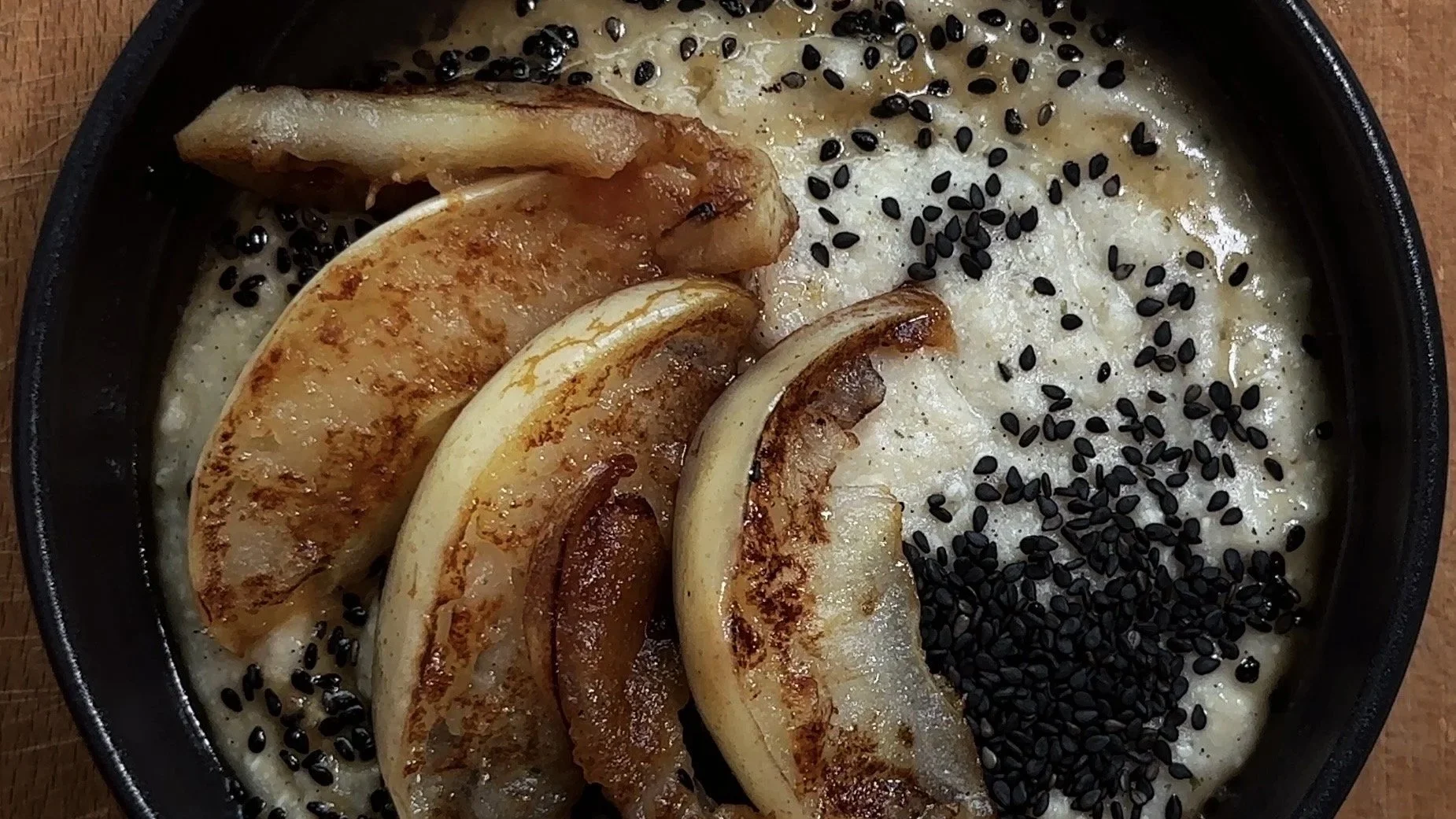
Built to hold you.
Every layer here has a job, and we'll walk through each one step by step.
Autumn arrives on a drier breath of air, and in Chinese medicine that shift is felt as much inside the body as on its surface, lingering within before it shows up as tight, flaky skin. This bowl is built around millet, a grain especially kind to digestion, with honey and ghee to moisten and soothe the season's rougher edges. Hemp seeds add a boost of protein, and black sesame brings a mineral powerhouse to the top.
In traditional kitchens, warm apples are used to strengthen digestion and moisten the Lungs, the organ system TCM links most closely to the condition of the skin, a lovely reminder that the best seasonal care rarely comes in a $199 bottle and is more likely already sitting in the pantry. Better still, it reaches beyond the skin, soothing a dry cough, an irritated stomach and a moody gut along the way.
Here’s What You’ll Need
100 g (½ cup) millet
Water for soaking
1 tbsp lemon juice or apple cider vinegar
500 ml (2 cups) fresh water for cooking
A splash of hot water or milk of choice, for blending
1 tbsp hemp seeds
1–2 tsp raw honey
¼ tsp vanilla extract or a vanilla pod
A pinch of sea salt
1 apple
Ghee butter
Black sesame seeds
01 Soak Overnight
Cover the millet with about twice its volume of water with a tbsp lemon juice and leave it at room temperature overnight, or for a few hours.
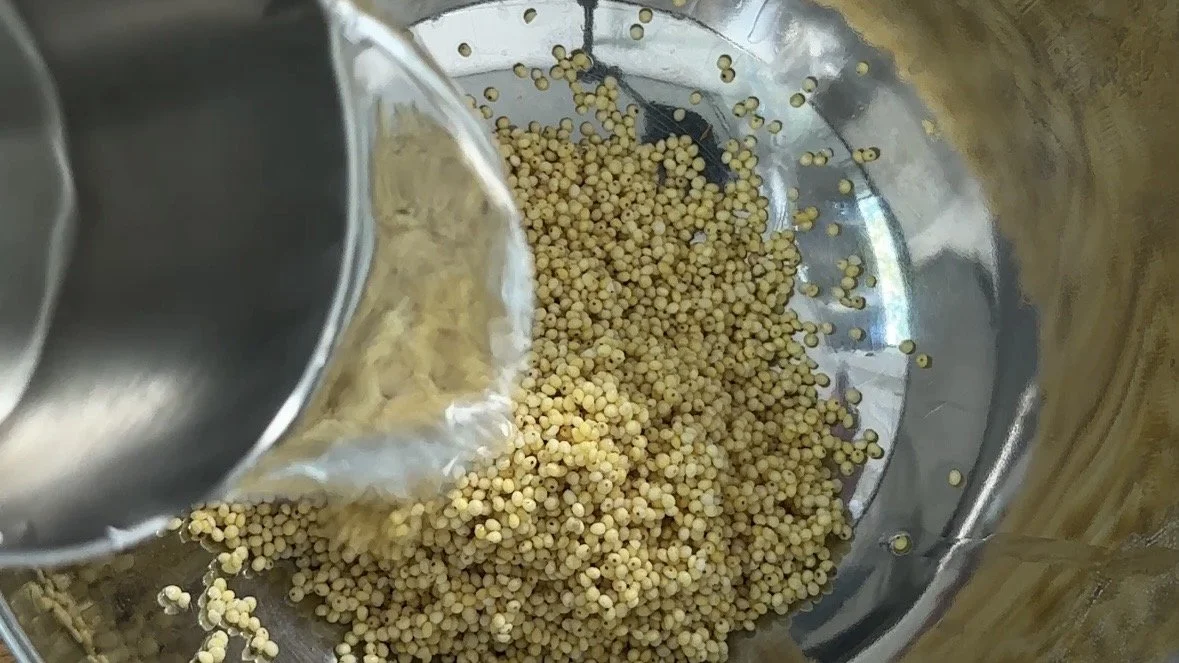
Why soak at all?
Like most grains and seeds, millet carries phytic acid in its outer layer, a natural compound that protects the seed but can make it harder for the body to absorb minerals. Soaking with a splash of acidic medium helps pull it out and neutralize it.
02 Rinse And Cook
Drain and rinse the millet in a fine sieve until the water runs clear. Bring it to a boil with 500 ml of fresh water, then lower the heat, partly cover the pot and simmer for 20 minutes, stirring now and then. If it starts to catch on the bottom, add a splash of water.
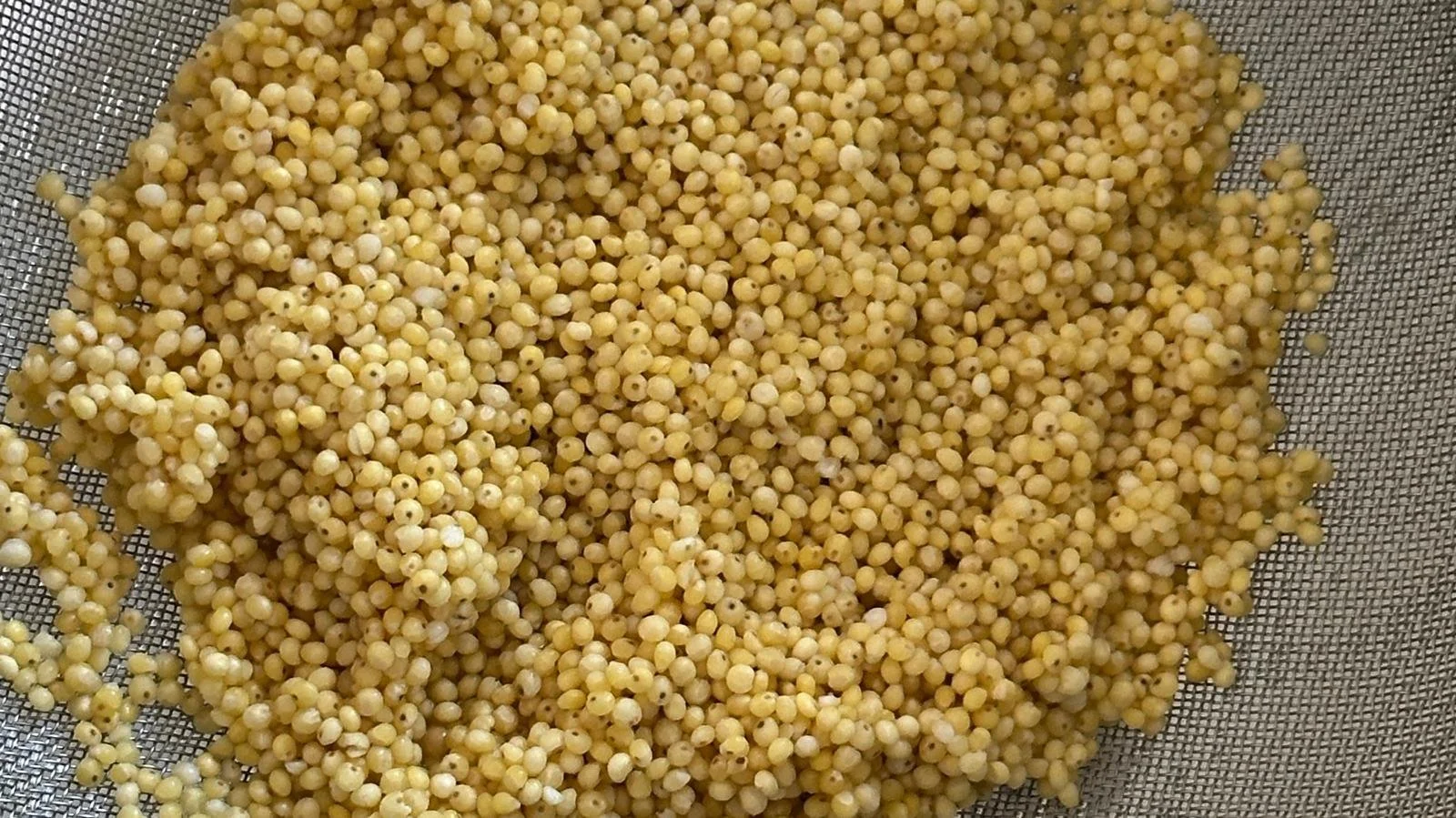
Watch the grains bloom.
As it cooks, each tiny bead splits open and turns soft and pale. When most of them have bloomed, the porridge is ready for the next step.
03 Blend
Take off the heat, let it settle for a few minutes, transfer to a blender (make sure it can handle warm content), or use an immersion blender right in the pot. Blend until smooth and velvety, adding a splash of hot water or milk of choice until it reaches the consistency you like.
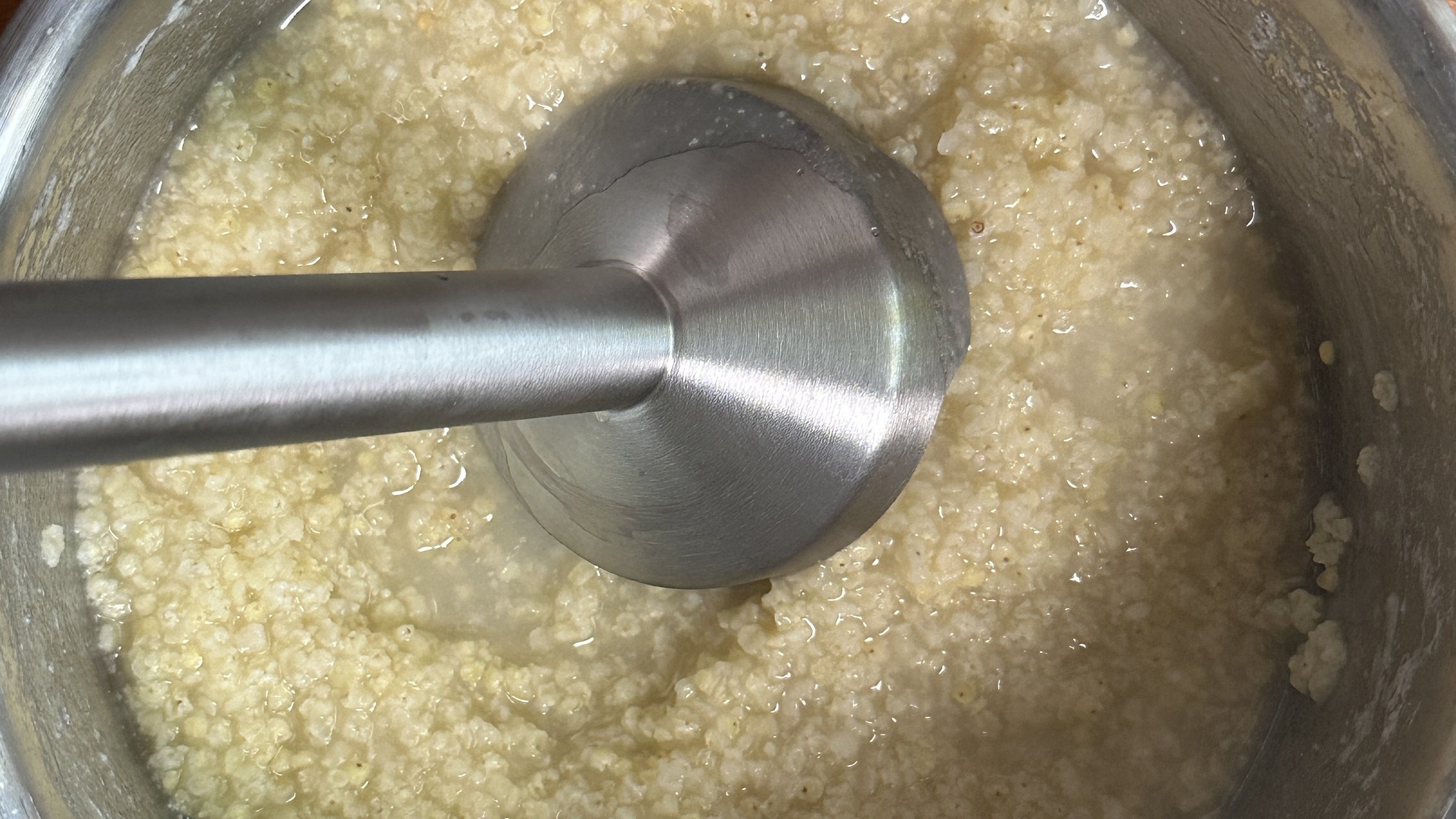
Let the blender do some of the chewing.
Breaking the grain down into a smooth cream takes some of the work off the stomach.
04 Stir In Hemp Seeds
Stir the hemp seeds through the blended porridge while it's still warm, but off the heat.
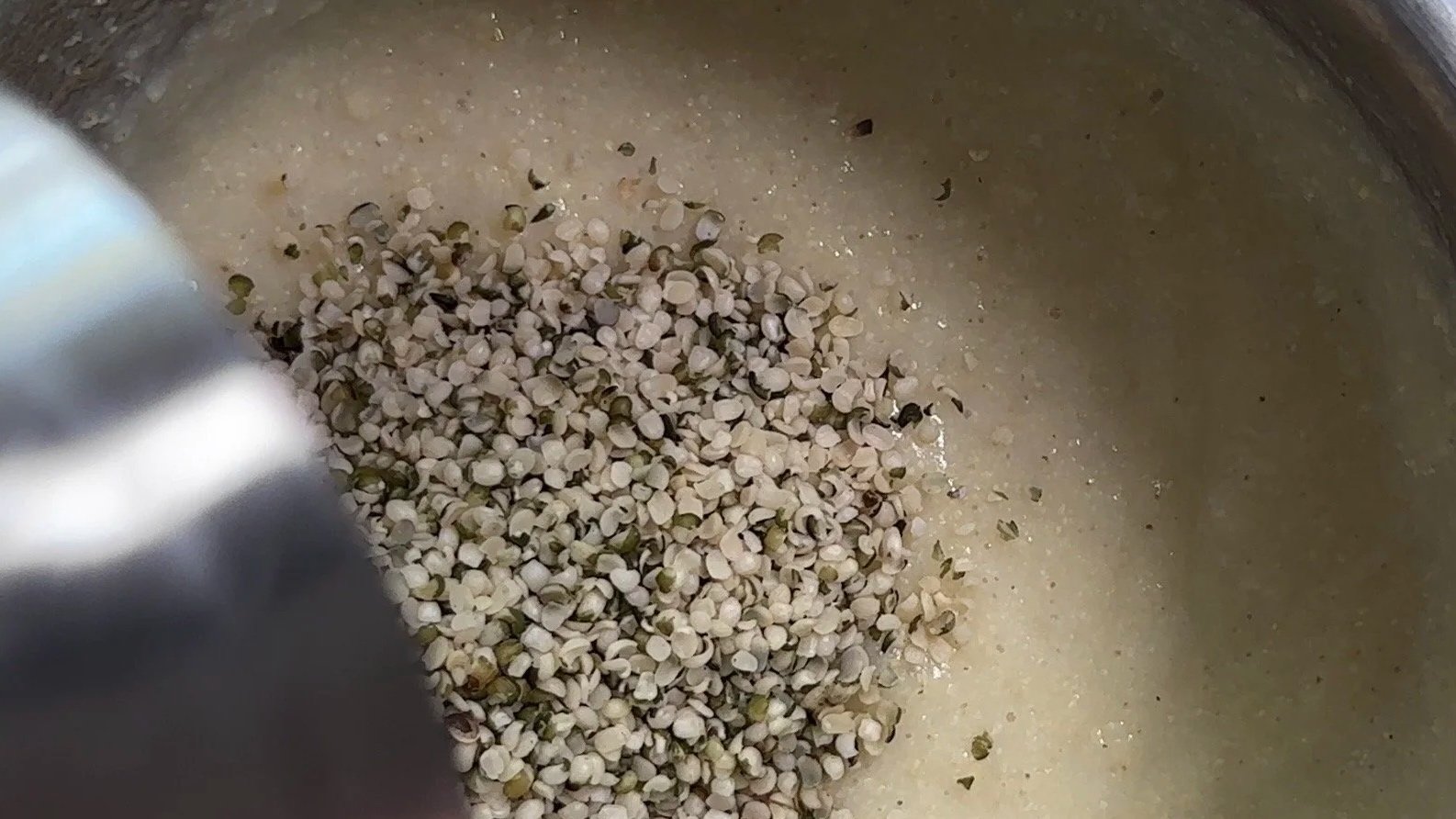
Protein, gently handled.
Hemp seeds add a generous round of plant protein along with omega-3 fats, the kind that help keep skin supple and calm. Those fats are delicate and don't love high heat, which is why the seeds go in after blending rather than into the simmering pot.
05 Stir In The Medicine
Let the porridge cool for a minute, then stir in the honey and a spoonful of ghee. In TCM food energetics honey is grounding and moistening, a gentle ally as the drier autumn air rolls in. The ghee slows how quickly the sugars from the grain and honey reach your bloodstream, so the energy lasts well past mid-morning.
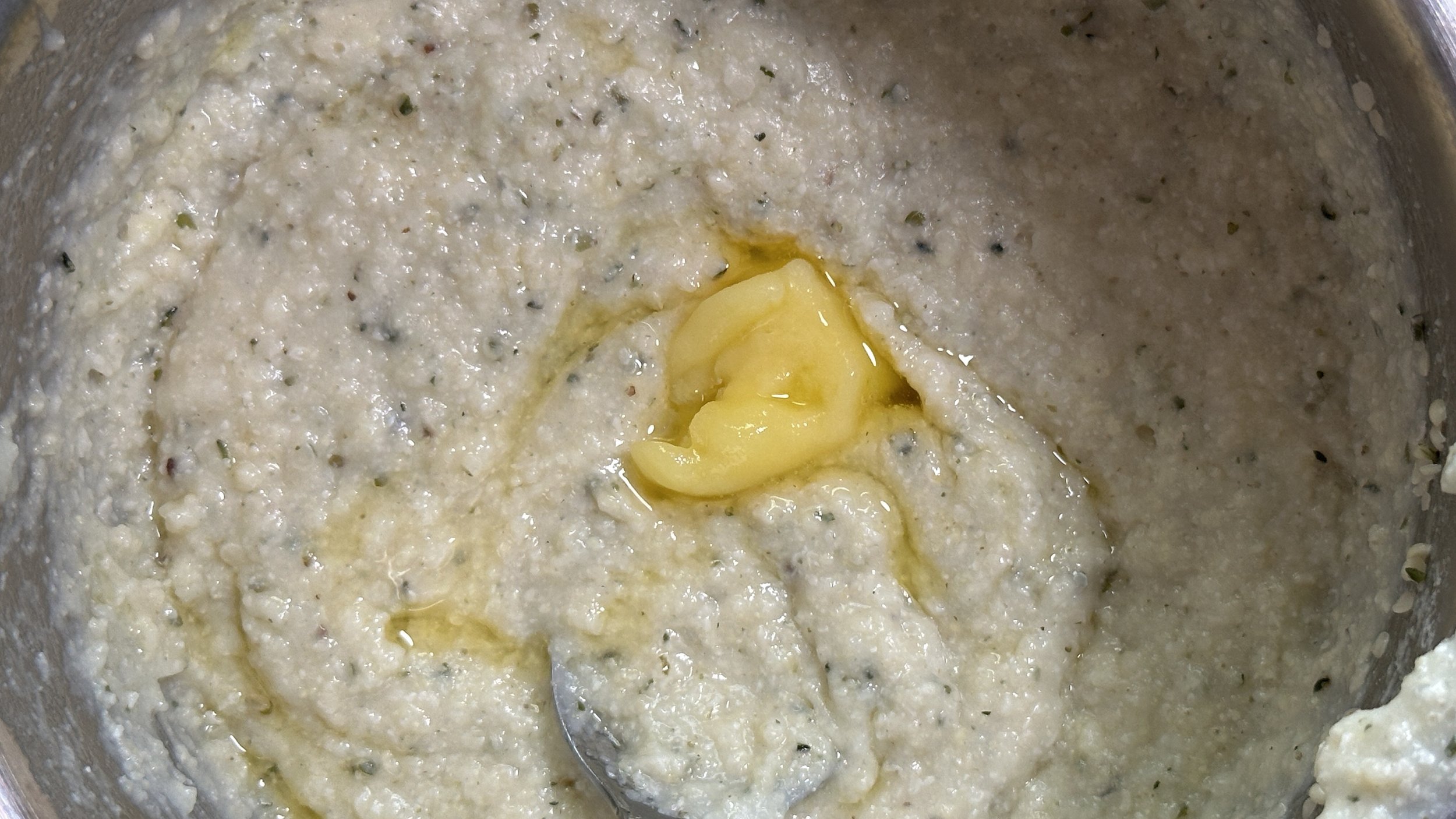
Ghee.
Ghee has long been treated as medicine in traditional kitchens, valued for soothing and lubricating the digestive tract while helping the body absorb the nutrients - it earns its place in autumn especially.
06 Add Vanilla
Vanilla extract works perfectly well, but if you can, try the real pod. Run a small knife down its length, open it up and scrape out the tiny black seeds with the back of the blade, then stir them through the porridge.
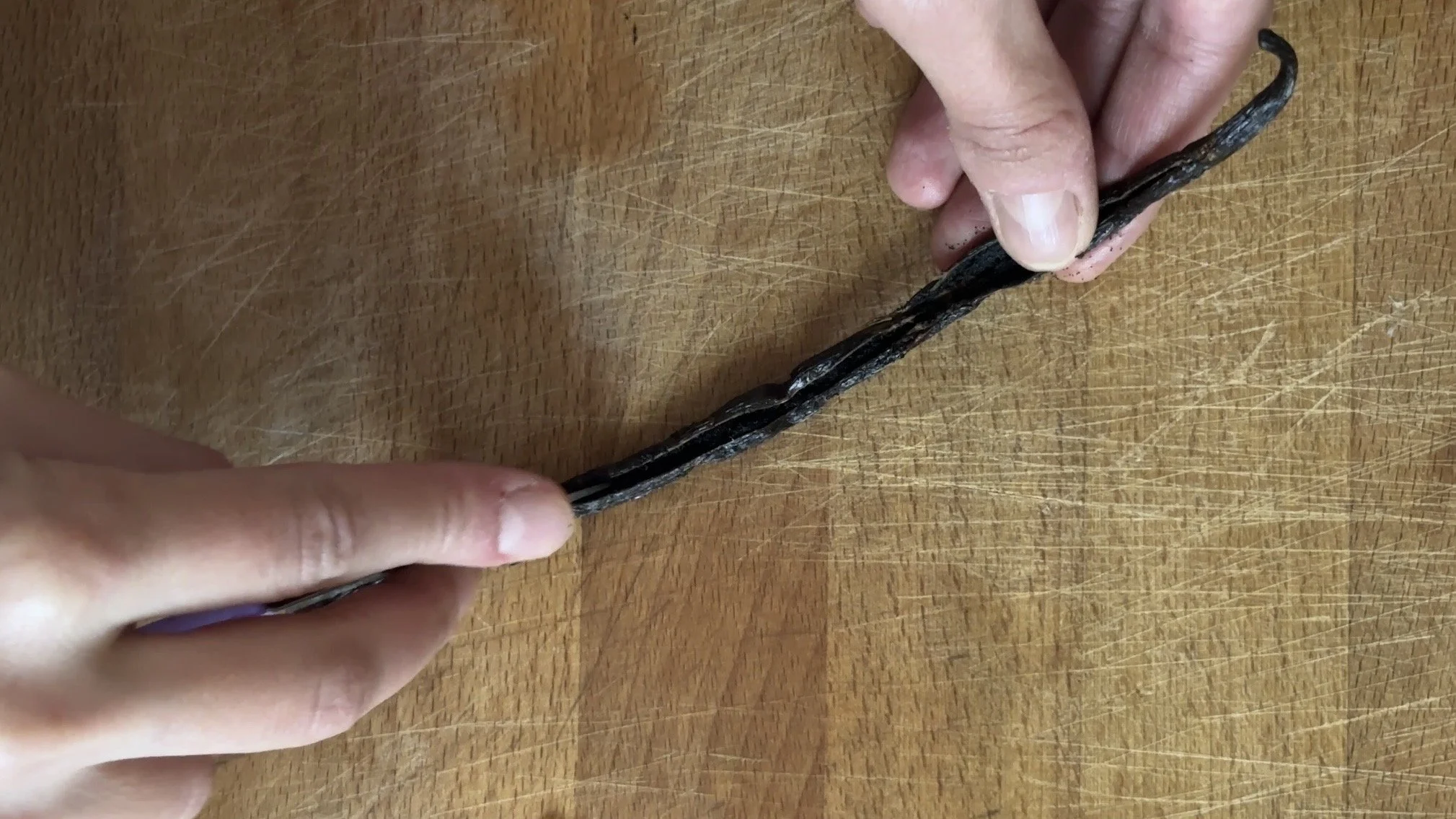
A warm note for digestion.
Vanilla is warming, sweet and aromatic, the kind of food TCM uses to wake up a sluggish digestion and clear Dampness - the heavy, waterlogged feeling late summer often leaves behind, showing up as bloating, a foggy head and seasonal breakouts.
07 Pinch Of Salt
Finish with a small pinch of salt. It won't make the porridge taste salty, it simply rounds out the sweetness and makes every other flavor a little brighter. I use black salt here, though sea salt works just as well.
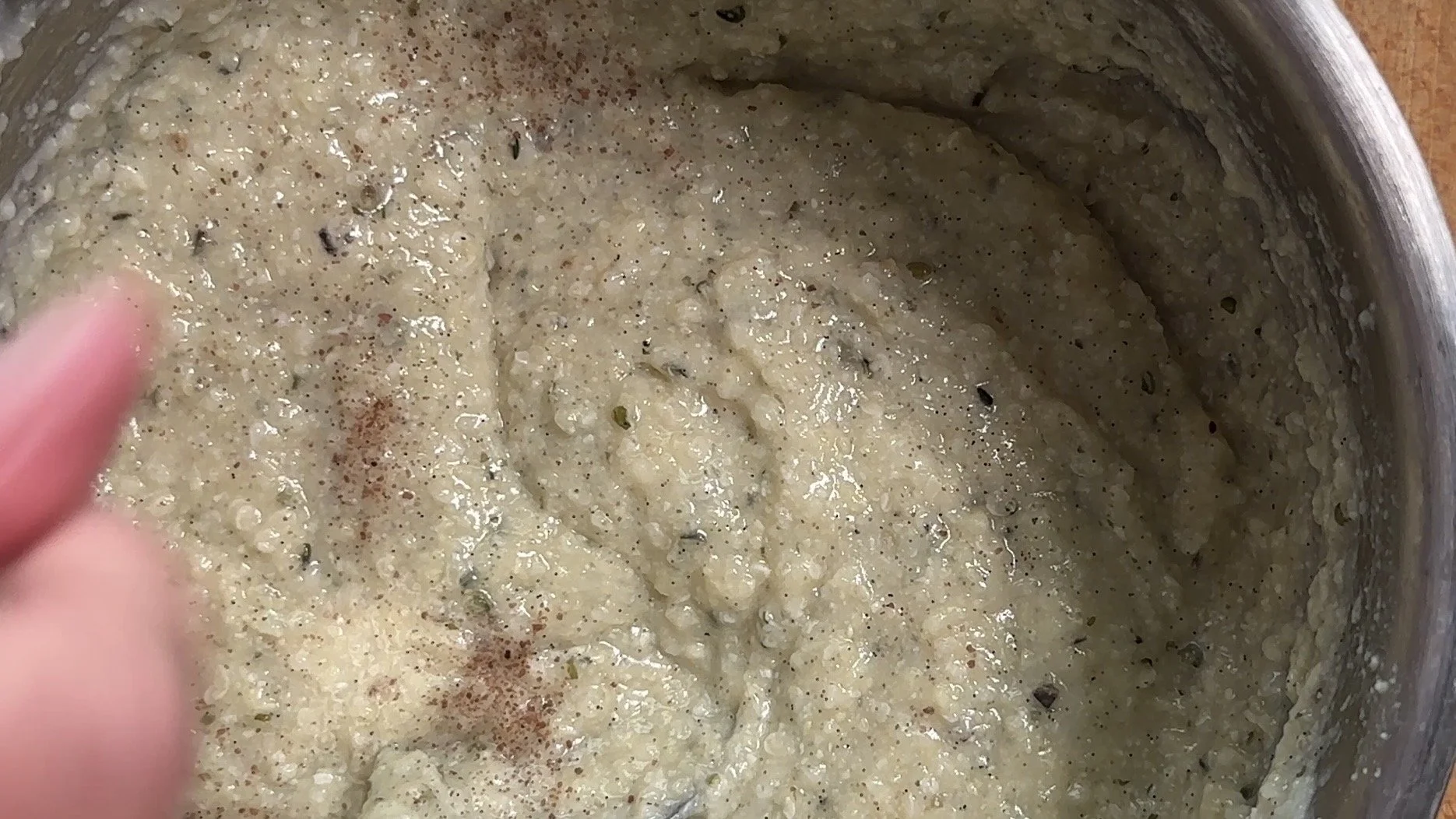
A salt with a past.
Black salt, or kala namak, is a staple of Ayurveda, where it has long been used as a digestive aid. It carries trace minerals and an alkaline quality that traditional practices link to better digestion. Its aroma is a little sulfurous straight from the jar, but a pinch disappears into the sweetness and leaves only a deeper, rounder flavor behind.
08 Sear The Apples
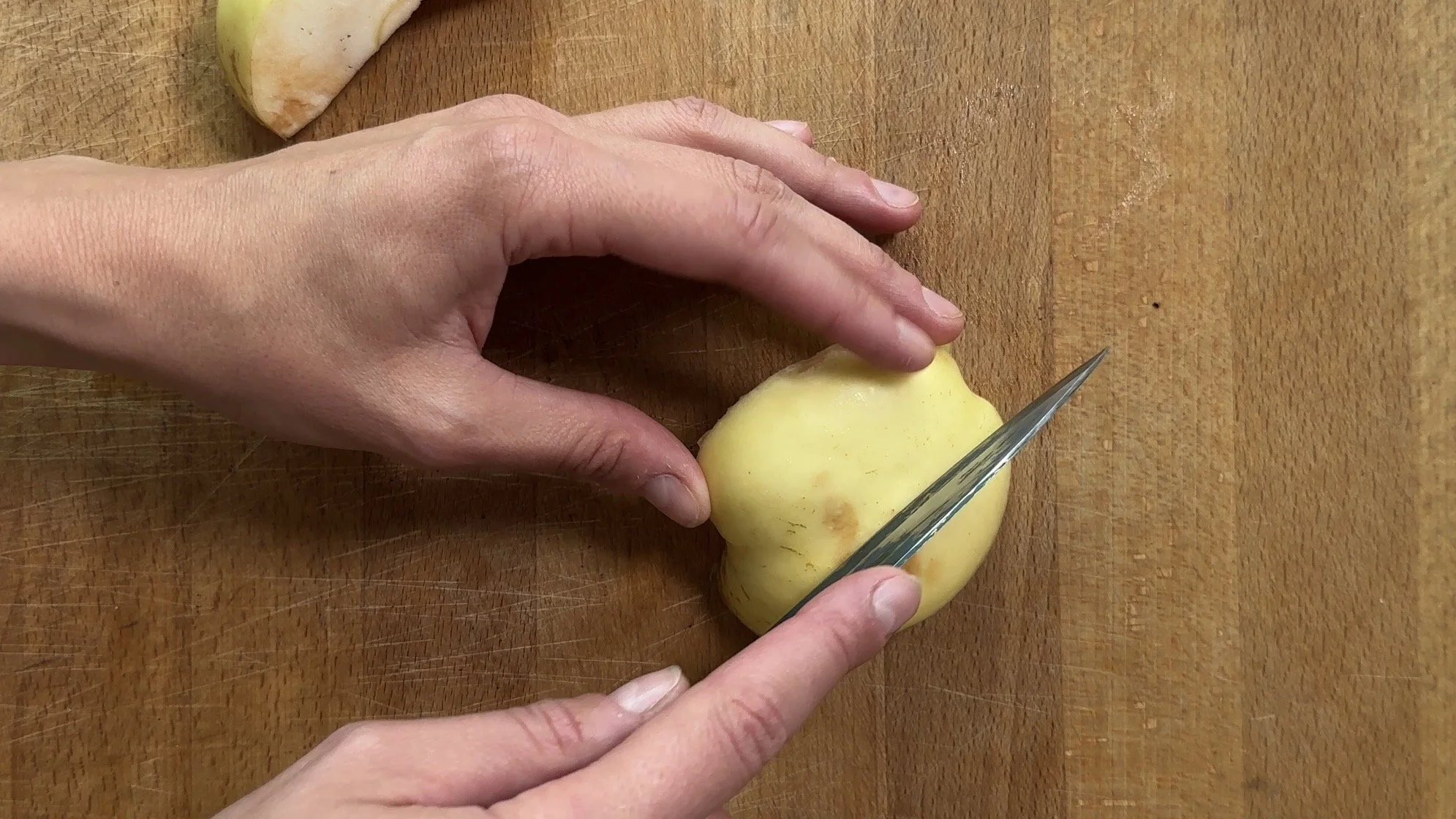
Slice the apple, melt 1 tsp of ghee in a small pan over medium heat and lay the slices in a single layer. Cook for 2–3 minutes on each side until the edges turn golden and sticky, then spoon them over the porridge with any juices left in the pan.
The apples bring the season.
Raw apple is sweet, slightly sour and cooling. Searing it in ghee softens that coolness and makes it far gentler on the stomach, while its fiber feeds the gut that the rest of the bowl is working so hard to support.
09 Top With Black Sesame Seeds
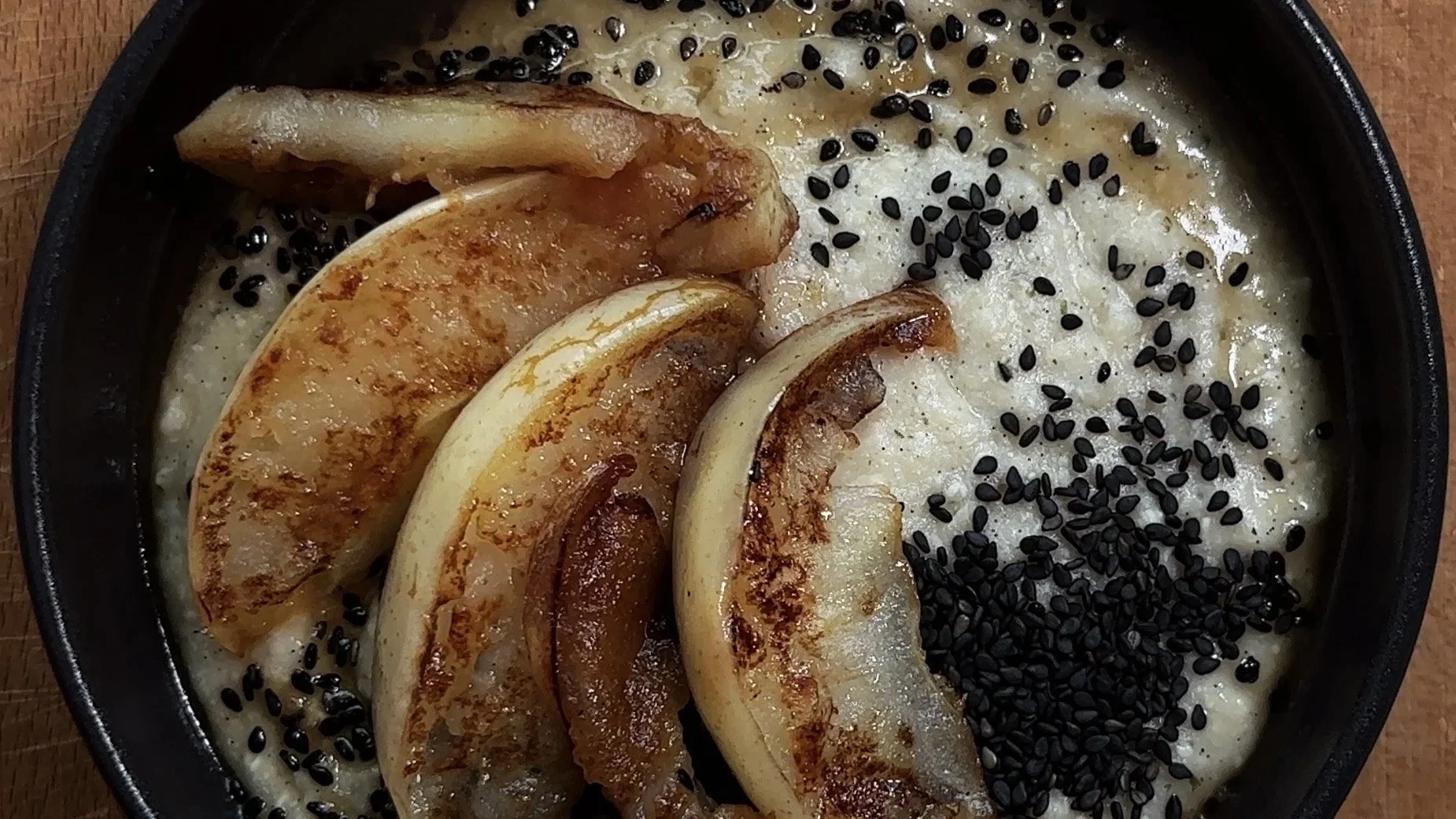
Scatter the black sesame seeds over the apples and porridge.
The longevity seed.
Black sesame is one of the oldest longevity foods in Chinese tradition, said to slow the signs of age when eaten regularly. In TCM it nourishes the Kidneys, the body's deep reserve of vitality that shapes how gracefully we age, from glossy hair to supple skin, and all it asks is a sprinkle each morning.
10 Have your moment with it
Eat it warm and slowly, sitting down, with nowhere to rush off to for the next ten minutes. This recipe makes two portions, so simply multiply it by the number of mornings you'd like to enjoy it in a row. Leftovers keep in the fridge for up to three days and come back to life with a splash of hot water and a gentle reheat, leaving only the apples to sear fresh each morning.
A word before you go.
As you may have noticed, this blog speaks the language of Traditional Chinese Medicine and leans on the concept of food energetics, the idea that every ingredient carries a warming, cooling, moistening or drying quality that shifts the balance inside the body. If you'd like to understand how TCM connects the changing seasons with the body's internal climate, how the skin offers a way to read what's happening within, and how food can gently bring it all back into balance, my guide The Tao And The Skin Part I: Awareness is available here. Consider it the map behind every recipe you'll find here.
Love, A.